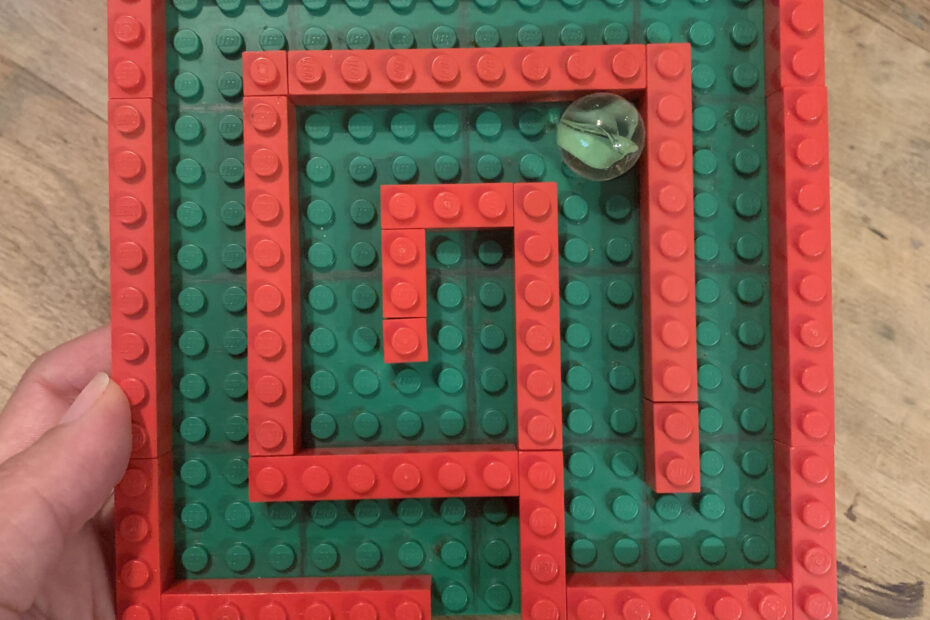
This fun and easy version of a finger labyrinth for kids is built out of LEGO bricks and offers a great creative challenge and prayer practice for children of all ages. Use this as a STEM challenge, a creative prayer practice, or a simple and creative way to be still and listen for the voice of God.
Note: LEGO® is a trademark of the LEGO Group of companies which does not sponsor, authorize, or endorse this site.
Walking a labyrinth is a great creative prayer practice! And there are labyrinths of all sizes: large labyrinths made of stone, or painted on canvas, or drawn on pavement….that you can walk through; small finger labyrinths made out of wood or clay or even LEGO bricks!
Finger labyrinths are small labyrinths that you trace with your finger as you center your thoughts and focus on God.
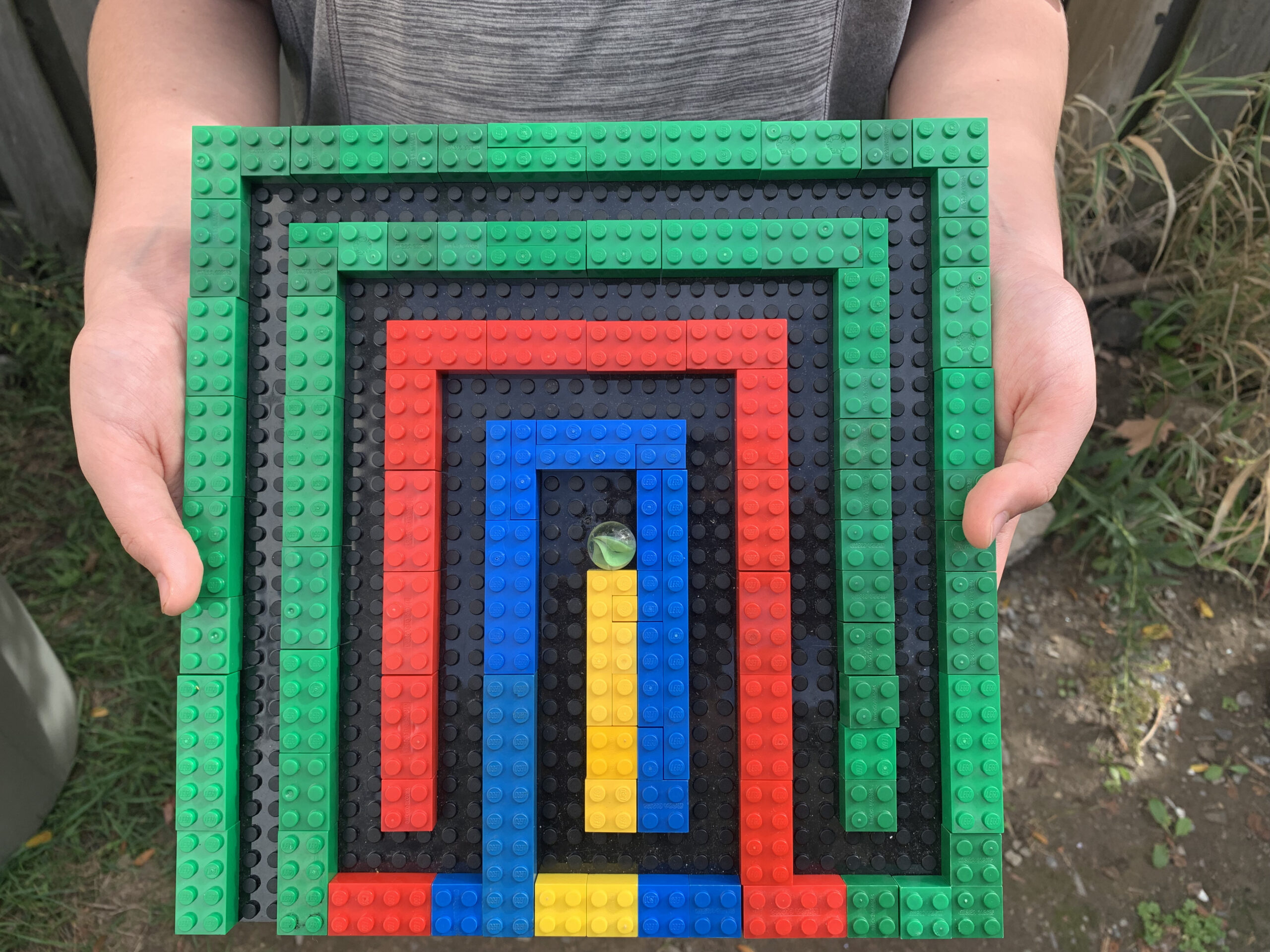
Today, we made some LEGO labyrinths as a fun, creative prayer practice (and a creative outlet!). These labyrinths you can trace with your finger, but we found that the best way to use these was actually to roll a marble through them!
There are many labyrinth ideas that you can create at home. This fun brick labyrinth is built out of LEGO bricks and makes a great project for children of all ages. One your labyrinth is built, you can used it as a prayer practice, or simply as a way to keep the kids busy in fidgety moments.
What is a labyrinth?
A labyrinth is not a maze—though at first glance, it might look like one. A maze is designed to confuse you with dead ends and wrong turns, but a labyrinth has just one continuous path that winds toward the center and then back out again. There’s no getting lost, only walking with intention. That’s what allows you to center your thoughts on God as you walk or trace a labyrinth: there are no choices to be made, and no dead ends.
For centuries, people have used labyrinths as a way to pray, meditate, or simply slow down and reflect. The gentle rhythm of following the path can quiet the mind and open the heart, helping you connect more deeply with God, yourself, or simply the present moment.
Walking a labyrinth is often described as a journey. Each step becomes symbolic—of life’s twists and turns, of letting go as you move inward, and of renewal as you walk back out. If you find a really big labyrinth to walk, then often the path meanders in a way that is very symbolic of our whole lives: with twists and turns, and taking you towards the center only to veer your path way out to the edges again, before finally arriving at the center of the labyrinth. Sometimes it can feel like we’re moving away from our goal, but ultimately what feel like detours work to bring us closer to our destination.
Some people bring a specific prayer, question, or burden with them and see what comes up along the way. Others simply walk in silence, breathing deeply and paying attention to the sensations of each step. There’s no one “right” way to walk (or trace, or roll a marble through…) a labyrinth; it’s more about being open to the experience.
You can find labyrinths in many churches, retreat centers, hospitals, and even public parks. Some are made of stone or grass, others painted on canvas or wood so they can be used indoors. Whether you walk it slowly or swiftly, barefoot or in shoes, alone or with others, the practice invites you to slow down and listen—to your body, to your breath, and to the still, small voice of God within. In a busy world, the labyrinth offers something rare: a quiet, sacred space to simply be.
The Brick Labyrinth
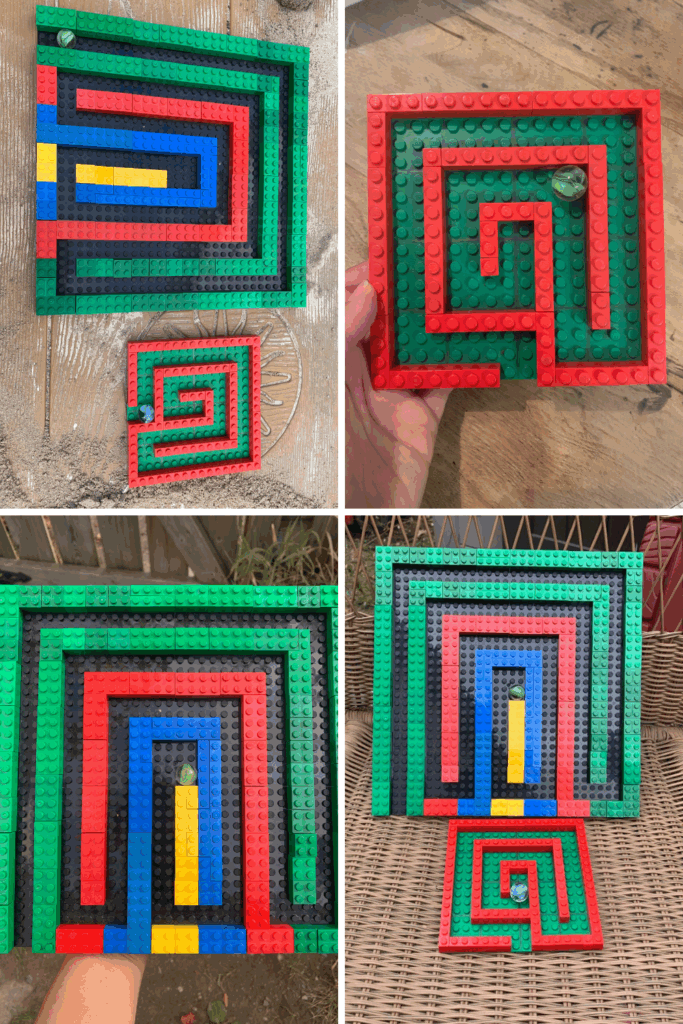
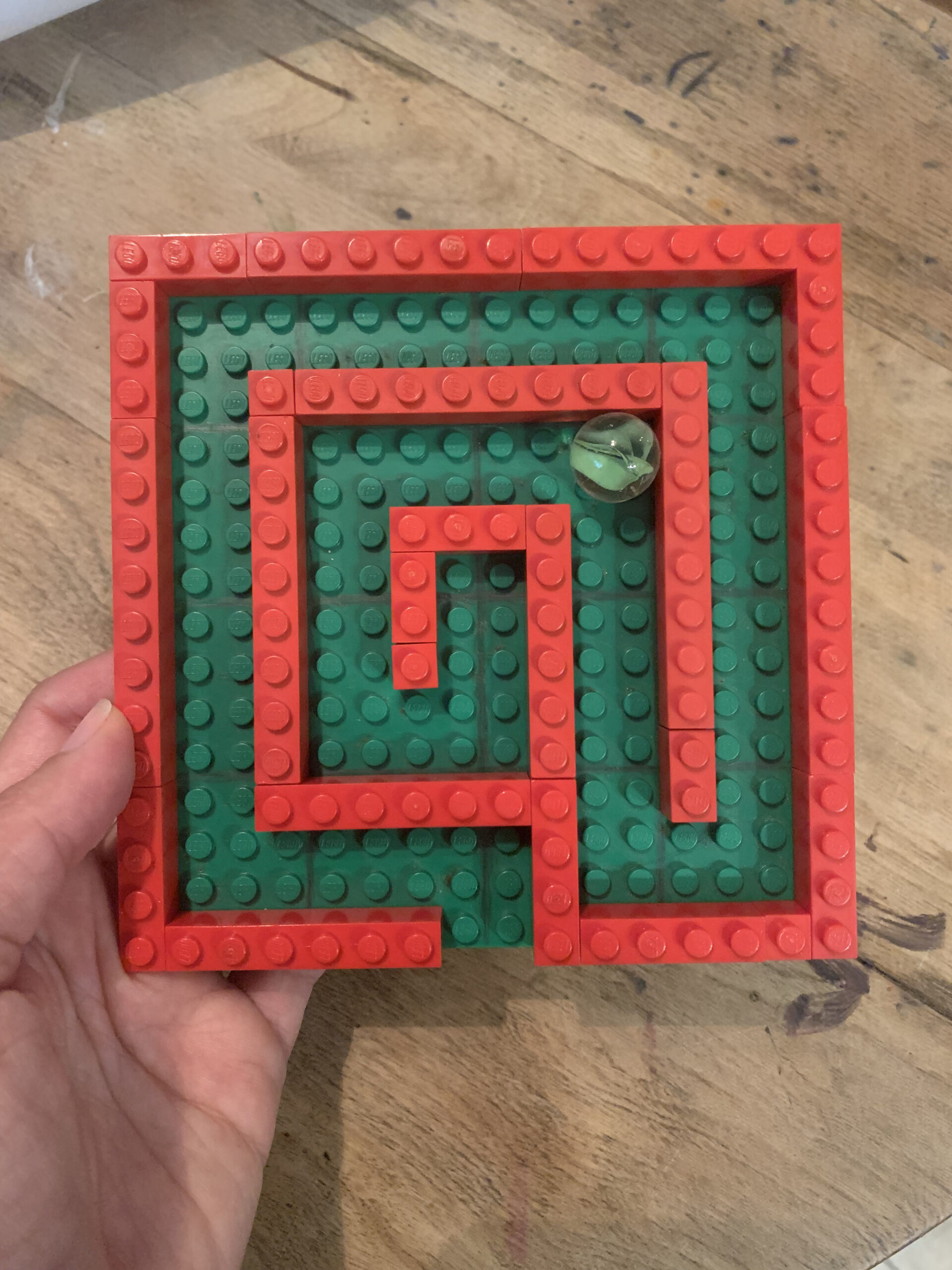
We built these small labyrinths out of LEGO to give a slightly different labyrinth experience. With these, you don’t walk the path, but rather trace it with your finger (which is honestly kind of a wild sensory experience because of the bumps on the bricks – I prefer tracing smooth labyrinths made of clay or wood or paper) or roll a marble through it.
This LEGO brick labyrinth also doubles as a STEM project! Half the fun for my son in creating this labyrinth was figuring out the twists and turns and getting the path correct as he build this out of bricks.
All you need to build your own LEGO brick labyrinth is:
- a big enough base plate
- bricks that are either 2-wide or 1-wide (depending on how big your base plate is)
- a template to build from or your own imagination and persistence
- a marble, if you want to roll a marble through your labyrinth
How to use your labyrinth:
- Start with the marble at the opening on the edge.
- Roll the marble slowly through the labyrinth until you get to the center.
- Slowly roll the marble back out to the edge.
- As you are doing this, you can say a prayer, you can ask God a question, or you can focus on your breath and just be still.
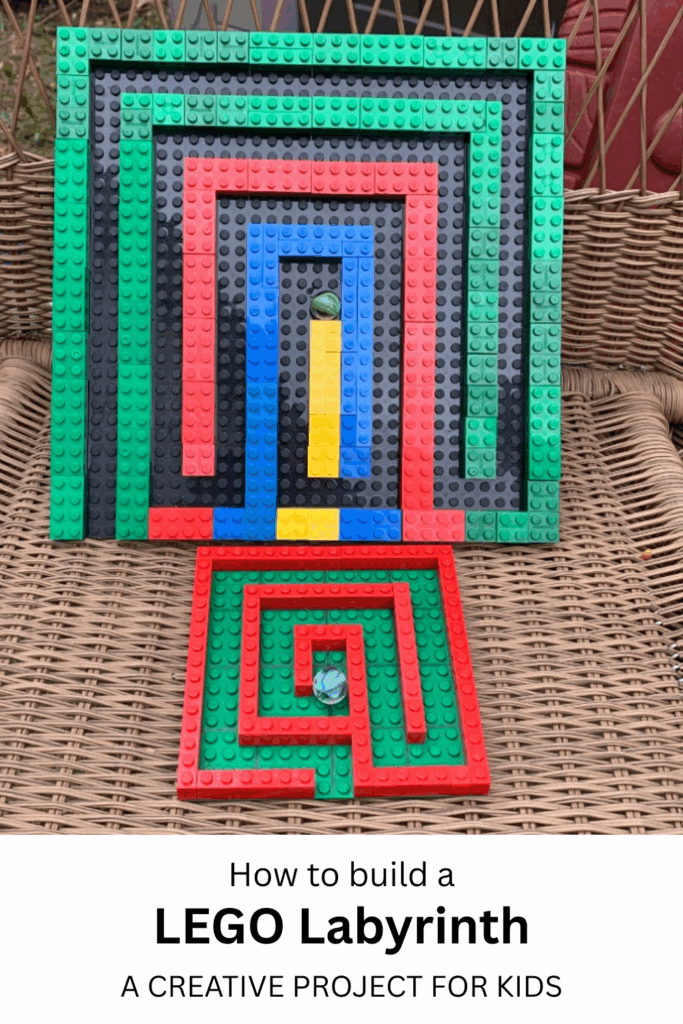
This “how to draw a 3-circuit labyrinth” tutorial is perfect for a small-to-medium sized labyrinth. Just follow the instructions with your LEGO bricks.
Below, you’ll find pictures of a smaller version of a simple 3-circuit labyrinth (with fewer pathways because of the size) and a different labyrinth that my son came up with just playing around with LEGO bricks. How many other ways can you make a labyrinth?
A Labyrinth Prayer
There are multiple ways to use a labyrinth for prayer.
You can ask God a question as you roll your marble toward the center. Pause at the center and just be still and listen. Listen attentively for an answer as you roll your marble back out.
You can say a prayer as you roll your marble through the labyrinth:
- Name some people who are on your heart.
- Name something (or some things) that you are grateful for.
- Ask for help with a problem or situation.
- Pray for people or places around the world.
- Ask for guidance.
- Say you’re sorry for something and pray for change.
A simple labyrinth prayer:
God, thank you for all the beautiful people and things in my life. Help me to be still and listen for your voice.
This is such an awesome activity for boys! I’m doing it with mine here asap!
Amazing! I hope they love it.