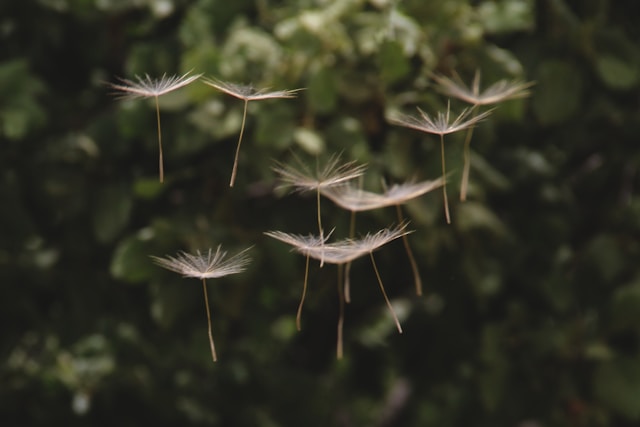
One of my favourite things (I have so many favourite things!) is doing guest preaching or pulpit supply in so many sweet and beautiful churches. Being invited to reflect on Scripture and share stories with others is a challenge through which God often instructs and reminds *me* just as much as he may be speaking to anyone else. This was a message written for a small but mighty congregation that our family has had the priviledge of walking with for a snapshot of their live as a community. As I was writing, it quickly became a love letter to the church – not just *this* church, but every church that we have been a part of and every beautiful, eternal soul who has graced us with the light and the love of Christ. May you know that your influence reaches far beyond what you will ever see, and that you are planting seeds that are carried far and wide to wild and faraway places.
Today is Mother’s Day, and because of that, I want for us to take a look at women in the Bible. There was a short list of women (most of them mothers) in the Bible that are some of my favourite stories – there is Mary, the mother of Jesus, who says “yes” to a literally impossible task, and through her “yes”, God changes the whole world; there is Hagar, who is a slave fleeing an abusive household, and when she runs away into the desert, she encounters God, she has a life-changing experience and she names God (the name that she uses is El Roi, the God Who Sees Me), a remarkable thing for a woman to do at that time; there is Sarah, who is so tired and burnt out from trying to fit into what the world wants her to be, and so tired of having her own hopes and dreams dashed, that she laughs at God when he promises her something that seems impossible; there’s Eve, the mother of all humanity who gets into a battle of wills with Satan himself; there’s Joanna, and multiple Marys, who were present at the empty tomb and witnessed Jesus’ resurrection; there are four unnamed women – known only as “Philip’s daughters,” in the book of Acts, who are prophets; there is Pheobe, who was deacon in the earliest church; and I could go on.
But today the women about whom I am going to speak are possibly women you have never heard of (they are women that I had never heard of, until I started preparing for this Sunday): Lois and Eunice.
Lois and Eunice are mentioned by the apostle Paul, in his second letter to Timothy, and they are only mentioned in passing. In his opening address to Timothy, Paul writes, “I thank God, whom I serve, as my ancestors did, with a clear conscience, as night and day I constantly remember you [Timothy] in my prayers. Recalling your tears, I long to see you, so that I may be filled with joy. I am reminded of your sincere faith, which first lived in your grandmother Lois and in your mother Eunice and, I am persuaded, now lives in you also.”
This short opening speaks to the power of generational faith.
The letter of 2 Timothy was written to encourage Timothy to stand firm against persecution and false teaching in Ephesus. It acts as a passing of the torch from Paul to the next generation of leadership, emphasizing that faithfulness to the Gospel requires courage and endurance. This letter has a ‘farewell tone’ to it, and it is widely regarded as Paul’s last letter. Paul wrote 2 Timothy from a cold Roman dungeon while awaiting execution under Emperor Nero. In this letter, Paul gives his final instructions and charge to Timothy, advising him to avoid distractions, urging kindness to everyone, warning against false teachers and the narratives of society (his and ours, as it turns out), and urging him to be faithful in his living out and teaching of the Gospel. This is where we hear some of Paul’s famous closing words: “I have fought the good fight, I have finished the race, I have kept the faith.” And he continues, “Now there is in store for me the crown of righteousness, which the Lord, the righteous Judge, will award me on that day – and not only to me, but also to all who have longed for his appearing.”
So why have I chosen this piece of Scripture for this Sunday? I think that this letter teaches us the following things:
- We are planting seeds
- Your influence is powerful, even if it is quiet and even if you do not see all (or any) of the fruit of your labours
- God produces the growth
- Glory is coming
Lois and Eunice were planting seeds. This is true of motherhood, and it is true of discipleship generally. There are so many seed planting parables throughout the Gospels. Jesus tells us that the kingdom of heaven is like a person who plants the tiniest of all seeds – a small grain of mustard seed – and that that tiny little seed grows into a plant so big that the birds of the air come and build their nests in it. He tells us the story of a farmer who went out to scatter seed, and he scatters it with such generosity and graciousness and wild abandon that he throws seed onto the hard path and the rocky ground and the shallow soil and the rich soil. He tells another parable of the growing seed, where he tells his disciples, “This is what the kingdom of God is like. A man scatters seed on the ground. Night and day, whether he sleeps or gets up, the seed sprouts and grows, though he does not know how. All by itself the soil produces grain—first the stalk, then the head, then the full kernel in the head. As soon as the grain is ripe, he puts the sickle to it, because the harvest has come.”
Now I don’t know about you, but those growing seeds seem a lot like children to me: Children who sprout overnight when you are asleep; children who begin small and vulnerable and grow into adults who are mighty and capable and – hopefully – provide refuge for birds and their nests (metaphorically, oftentimes, but maybe sometimes out there in nature with actual birds). They are the children that we birth and nurture into adulthood; they are the children that we adopt into our homes; they are the children that we pour into as a community (for this is true even if you are not a mother, not a parent, have never had children of your own – we are all part of a great and growing community that pours into the children around us). But remember that we are also all children of God. These great and growing seeds are every person that you have ever encountered. We put our roots down somewhere; we endure storms; we wither in the droughts and delight in the provision of rain; we strain our whole bodies towards the sunlight; and God walks in the garden.
Lois and Eunice are mentioned only in passing in the second letter to Timothy. And sometimes, this can feel a lot like motherhood. So much of motherhood happens behind the scenes. It doesn’t make headlines. It doesn’t get recorded in detail. It’s made up of thousands of small, unseen moments that, on their own, don’t seem remarkable—but together, they shape a life. And sometimes it feels like we are only mentioned in passing. (And this might be a bit like our life as a church, as well – at least in our current Canadian society – the world blows by us, concerned with bigger and flashier and ‘more important’ and ‘more relevant’ things – or concerned with profit and fame and pleasure – and we are mentioned in passing. Sometimes that is even desirable – better that than mentioned in the context of war and greed and exiling our neighbour. The church, too, and its life, is often made up of thousands of small, unseen moments that shape a life.)
But that one, single line of Scripture represents decades of love and faith, mercy and grace poured into another person. As in motherhood. As in the church. And that makes a difference. Because even though they are only mentioned in passing, Lois and Eunice’s impact is anything but small. They helped shape Timothy into the person—and the leader—that he became. And he helped to bring the message of Jesus – the coming near of the kingdom of God – the promise and the charge of grace and mercy and self-giving love – to a world desperately in need of reconciliation.
C.S. Lewis once wrote that the only things that last forever are people. Everything else—our achievements, our possessions, our to-do lists; the books we write and the cities we build; the politics that we fight over and the empires that we create — they will all fade. But every single person that you have encountered is of far more significance, far more value that any empire; it is people who are eternal.
What Lewis writes is this (in The Weight of Glory): “There are no ordinary people. You have never talked to a mere mortal. Nations, cultures, arts, civilizations—these are mortal, and their life is to ours as the life of a gnat. But it is immortals whom we joke with, work with, marry, snub, and exploit—immortal horrors or everlasting splendors.”
And so, I think the lesson that we learn from Lois and Eunice is this: those seeds that you plant have eternal value. You may not see the fruit of your parenting, of your evangelism, of your discipleship, of your merely existing as a loving human being, pouring into the lives of others, in the world. But rest assured that your faith outlives you. Your labours outlive you. Your legacy outlives you. This is true as individuals and as a church.
Family Church has inspired us (our family) to be the church in a different way. It has instilled in us joy and creativity and a sense of belonging that we hope to carry into other places and scatter those seeds so that they will produce new growth. That’s the nature of seeds: they fly away from you, carried on the wind to new and wild and faraway places. And God produces growth when we aren’t even looking.
You don’t always get to see the full impact of your prayers, your teaching, your example, your love. Sometimes the most important parts of your influence happen later… or elsewhere… or in ways you never fully know.
I want you to take a moment and think about those people in your life who have poured into you. Those people who have maybe seen the impact of their prayers, their teaching, their example, their love, and those whose lasting impact they may not fully know. Think of big moments and small moments.
What comes to mind for me is a friend inviting me on a retreat; I remember the glory of delighting in the presence of God and the community around me; I remember the strangers – people I had never met and never saw again, people who were part of the larger community, the body of Christ, the communion of saints, who came one morning to wake us at 5:30am, with the sunrise, with song and with roses. And then they disappeared. The love and grace and generosity of that moment stayed with me.
I remember the friend of mine – decades older than me and whom I knew only through church Bible study – inviting me and my then-small twins over to swim in the pool at her apartment complex. The love and the kindness and the hospitality of that moment stayed with me.
I remember another friend of mine, also met through the church, who invited me to a small group of people on the fringes of ministry, whose wisdom I have relied on and returned to again and again. A friend who writes books (among other things) and whose books I have – all of them – tucked into my bookshelf like treasures. A friend who seems to endlessly make time for those around him, and whose biggest impact may be in sitting around a table with a cup of coffee.
I remember the church ladies whom I walked beside for years, sharing coffee and stories and worship and small groups. Church ladies whose lives reflected so clearly the light and love of Jesus. Women whose impact was, at times, perhaps like Lois and Eunice, mentioned only in passing, but who helped to shape a life. Their impact, too, was in their stories, their wisdom gathered over decades of walking with Christ through a wild and crazy world, their generosity and their hospitality and their love.
I remember the love and grace of a church community who had high chairs in the sanctuary, breakfast at every Sunday morning, and coffee during the sermon (these weren’t nothing!) that showed us the hospitality of welcoming young families truly as they are.
I remember the church community who surrounded us when my husband and I had twins (well, I “had” the twins, but he was certainly indispensable in the whole adventure). They came and cooked our meals and washed our dishes and did our laundry, while I struggled just to make it through the day. They demonstrated what the Kingdom of God looks like: not empire, not control, not military victory and financial security and comfort. Rather: love, grace, mercy, and hospitality.
And there are more moments, more people – enough, perhaps, to fill an entire book, to fill volumes, to fill a life.
The sower does not control the outcome—only the scattering. And that can be both humbling and freeing. We are responsible for faithfulness, not results.
And…small acts of faith, small moments of obedience, small expressions of love are not small at all in the Kingdom of God.
Finally, remember: the Kingdom of God is not just some faraway place, but rather it is breaking in here and now. It is here wherever we see love and grace and mercy win over exclusion and self-centeredness and competition. It is here wherever we see the radical hospitality of welcoming the stranger. And…glory is coming. The fulfillment of that Kingdom is coming.
Note how Paul closes his letter (before his final greetings to his companions): “I have fought the good fight, I have finished the race, I have kept the faith. Now there is in store for me the crown of righteousness, which the Lord, the righteous Judge, will award me on that day – and not only to me, but also to all who have longed for his appearing.”
One day, God will look at all these beautiful, wild gardens that have sprouted and say “It is good.”
Sovereign and loving God, who is like a mother hen gathering her chicks under her wings (Luke 13:34), may your Kingdom come here on earth as it is in heaven, with all its grace and mercy and love, all its beauty and splendor and growth – like wildflowers in a garden, like a great and mighty tree that provides refuge for the birds. Remind us that our small actions have eternal value, that we are planting seeds that will outlive us, seeds that may be caught on the wind and travel to faraway places. Encourage us in our planting and nurturing. Empower us to *be* your Kingdom here on earth. And *thank you* God, for all those who plant seeds and who water gardens.
Amen.